What kind of cage best suits a Chinchilla?
Well, It depends on the needs of your Chinchilla. A pet owner generally offers a larger cage, with ample space to romp around and expand their family. A breeder may have 1 or 2 colony cages, but will most likely use smaller breeding runs for the safety of their breeding animals.
Both cages are perfectly safe and ideal to use.
Both cages are perfectly safe and ideal to use.
|
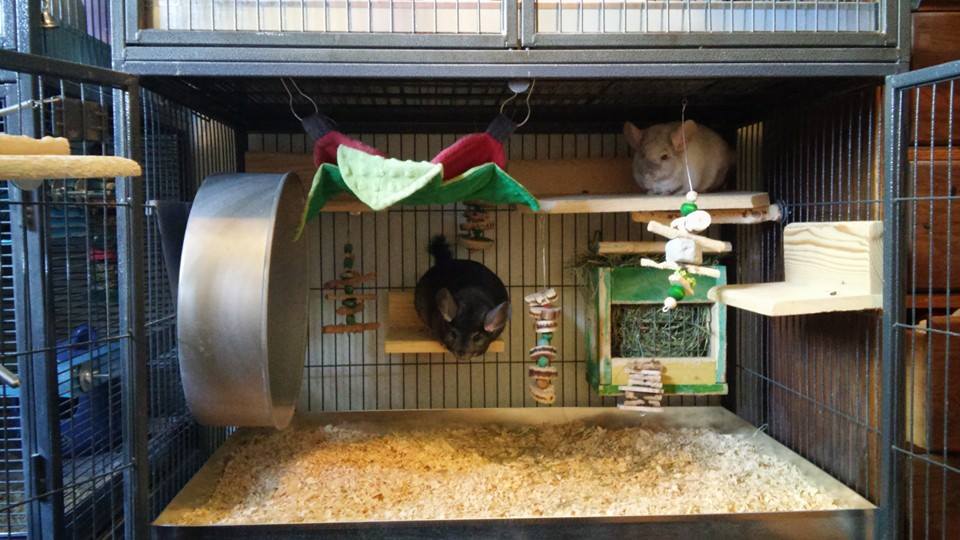
Pet CageTo the left is an example of a spacious cage set up for two Chinchillas. The cage pictured here is a Ferret Nation 182 single unit. ( click photo for shopping option ).
This unit is large enough for 3-4 Chinchillas. The bar spacing is 1" wide making it safe for adult chinchillas, but chinchillas 3 months old and younger can easily get stuck in the bars, or worse escape their cage and get injured. So it's best to get a cage with the right bar spacing and height for your pet. |
There is no official standardized cage size for Chinchillas in the USA, however the common understanding is that Chinchillas are a rock-hopping, den-dwelling species that prefers to stay within the confines of its own territory. This behavior in the wild, and in captivity, suggests they do better with cages that are wider than they are tall. Cages that are commercially available cater to taller sizes for species that are tree-dwelling climbers. We must make due with what is commercially available, and provide ample ledges in taller cages to prevent any sort of fall that would otherwise be fatal. You can certainly choose larger enclosures, but make sure you’re providing ample shelves for floor space/ to break falls, and not just leaping ledges/perches. There is a difference that may save your pets life!
Suggested minimum size: 31 in. L x 20.5 in. W X 40 in. H - 1” bar spacing MAX.
Holding/ Starter/ Maternity: 25 in. W x 12-1/2 in. D x 12-1/2 in. H - ½” bar spacing MAX.
Chinchillas do enjoy hopping around, so a cage with some height is a good option for pet chinchillas. Make sure you prioritize floor space as well though, because Chinchillas are not tree-climbers. You want to be sure to break up the height of the cage with wider levels to prevent falling from the top to the bottom. Neglecting to do so could result in injury! The best thing to do is use your cage space wisely, and put lots of levels, ledges, tunnels, hammocks and other accessories in. A good rule of thumb is that you never want the fall to be greater than 4 chinchilla lengths, about 24 inches. Not every Chinchilla is graceful.
Suggested minimum size: 31 in. L x 20.5 in. W X 40 in. H - 1” bar spacing MAX.
Holding/ Starter/ Maternity: 25 in. W x 12-1/2 in. D x 12-1/2 in. H - ½” bar spacing MAX.
Chinchillas do enjoy hopping around, so a cage with some height is a good option for pet chinchillas. Make sure you prioritize floor space as well though, because Chinchillas are not tree-climbers. You want to be sure to break up the height of the cage with wider levels to prevent falling from the top to the bottom. Neglecting to do so could result in injury! The best thing to do is use your cage space wisely, and put lots of levels, ledges, tunnels, hammocks and other accessories in. A good rule of thumb is that you never want the fall to be greater than 4 chinchilla lengths, about 24 inches. Not every Chinchilla is graceful.
Breeder CageChinchilla Breeders use Breeding runs to safely house their animals. A breeding run is generally smaller than a pet chinchilla's cage. The breeder chinchilla's cage will be somewhere around 15"W x 24"D x 15"H. Runs will have 3 or more small cages, and a long tunnel like cage in the back. The cages will house the females, and there is a hole in each cage that only the male can go through. His tunnel in the back gives him access to each cage.
The females cannot enter the tunnel because they wear a light weight breeding collar that prevents them from fitting. This is for the safety of the female, because without the collar she may wander into another female's cage and because of hormones and territory issues, they will fight. Fighting can result in injury, loss of pregnancy, and death. The small cages and collars are for their safety. A Chinchilla in breeding will also not have most of the luxury items pet chinchillas have ( multiple ledges, tunnels, houses, swings, etc. ) because those items can be a health risk to the kits growing inside. If a Chinchilla misses a landing, falls, or hits one of these items it can kill a growing kit. Though they don't have the luxury items, they are still fed a healthy diet, given ample chew items, and are always offered hay. |
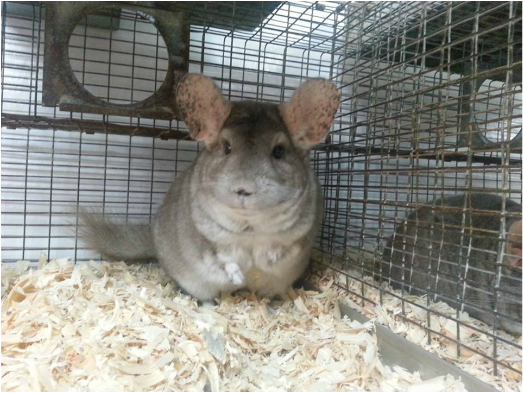
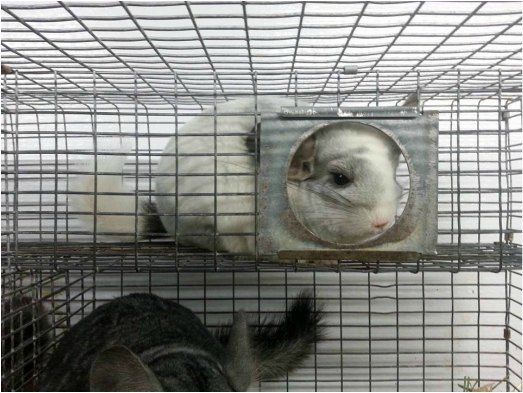
Here you see a male chinchilla sitting in his tunnel, peeping out of his hole. Photo Credit Aces Up Chinchillas.
|
Chinchilla Breeders get a lot of negative attention for these practices, but most of that attention comes from someone being uneducated about the reason behind the practice. It's important for us to acknowledge the hard work and dedication reputable breeders put into their herds. It's a very expensive and emotionally taxing profession and most do not get the credit they deserve.
What Should be in my pet's cage?
A pet chinchilla's cage can be minimal or totally decked out. Here we will list the basics and the extras.
Basics:
- Ledges
- House
- Glass water bottle ( bowls are NOT acceptable )
- 1-2 Chew toys
- Hay
- Food dish
- Dust house ( or glass dish )
- Litter ( such as pine or aspen shavings, or fleece liners.
Extras:
- PVC tube tunnels ( covered in fleece )
- Wooden tunnels
- Houses of different sizes
- Hay feeder
- Hammocks
- Beds ( cubes )
- Swings
- Plethora of hanging chew toys
- Wooden poop guards
- Metal pans for cage ( if available for your cage )
- Exercise Wheels ( list of safe wheels can be found in navigation bar )
Basics:
- Ledges
- House
- Glass water bottle ( bowls are NOT acceptable )
- 1-2 Chew toys
- Hay
- Food dish
- Dust house ( or glass dish )
- Litter ( such as pine or aspen shavings, or fleece liners.
Extras:
- PVC tube tunnels ( covered in fleece )
- Wooden tunnels
- Houses of different sizes
- Hay feeder
- Hammocks
- Beds ( cubes )
- Swings
- Plethora of hanging chew toys
- Wooden poop guards
- Metal pans for cage ( if available for your cage )
- Exercise Wheels ( list of safe wheels can be found in navigation bar )
What shouldn't be in my pet's cage?
|
There are companies out there who strive to provide nothing but the best for your pet, and others who just want your money.
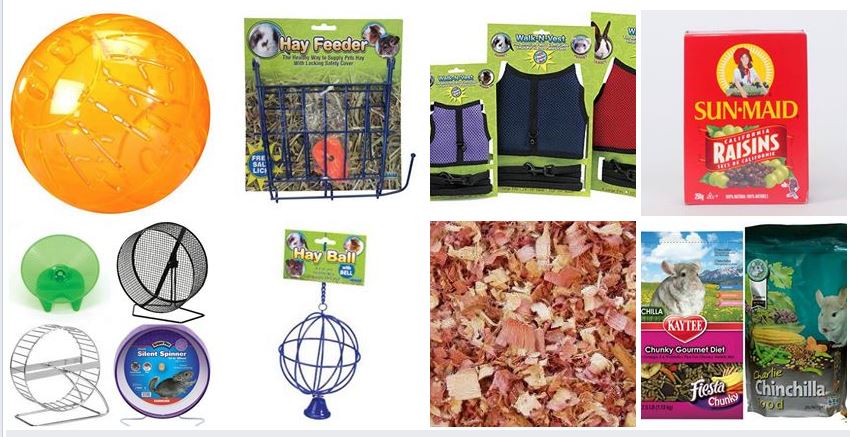
Here's a list of items you should never have in your pet's cage, or use with your pet. |
Chinchilla-Don'ts :
1. Roll around balls AKA " Death balls "
- They're too small for a chinchilla, causing their backs to arch unnaturally. They also lack proper ventilation, and have poor visibility ( even the clear one ).
2. Wire hay racks. We personally had a chinchilla rip his eyelid open on one. Others have unfortunately found their chinchillas stuck in them.
3. Wire hay balls. Owners have found their chins with legs stuck, or their heads stuck inside. These cases, the chin does not make it.
4. Pet store wheels. They're generally ONLY 12" wide, which is too small for a chinchilla to make a natural stride thus causing the back to arch unnaturally.
5. Cedar bedding is toxic to chinchillas.
6. Any "expanding" bedding/litter. If ingested it will expand inside your pet and they will have to go to the vet.
7. Any plastic items.
8. Any fabric other than fleece. Fleece should be removed if it's chewed on.
1. Roll around balls AKA " Death balls "
- They're too small for a chinchilla, causing their backs to arch unnaturally. They also lack proper ventilation, and have poor visibility ( even the clear one ).
2. Wire hay racks. We personally had a chinchilla rip his eyelid open on one. Others have unfortunately found their chinchillas stuck in them.
3. Wire hay balls. Owners have found their chins with legs stuck, or their heads stuck inside. These cases, the chin does not make it.
4. Pet store wheels. They're generally ONLY 12" wide, which is too small for a chinchilla to make a natural stride thus causing the back to arch unnaturally.
5. Cedar bedding is toxic to chinchillas.
6. Any "expanding" bedding/litter. If ingested it will expand inside your pet and they will have to go to the vet.
7. Any plastic items.
8. Any fabric other than fleece. Fleece should be removed if it's chewed on.
